Learning Programming: How to Start Your Journey with Python, JavaScript, and Beyond

Learning programming can feel intimidating at first. With so many languages, tools, and career paths available, beginners often struggle with one simple question: Where do I start? The good news is that programming is more accessible today than ever before. With the right approach, anyone can learn how to code—even without a technical background.
This guide will walk you through how to start learning programming step by step, focusing on beginner-friendly languages like Python and JavaScript, while also helping you build the right mindset and habits for long-term success.
Why Learn Programming?
Before diving in, it’s important to understand why programming is worth learning.
Programming allows you to:
- Build websites, apps, and software
- Automate repetitive tasks
- Analyze data and solve problems
- Open doors to high-demand careers
- Understand how technology works
Even if you don’t plan to become a professional developer, programming is a valuable skill that improves logical thinking and problem-solving.
Step 1: Choose the Right Language
One of the biggest mistakes beginners make is trying to learn too many languages at once. Instead, start with one language and build a strong foundation.
Python: The Best Beginner Language
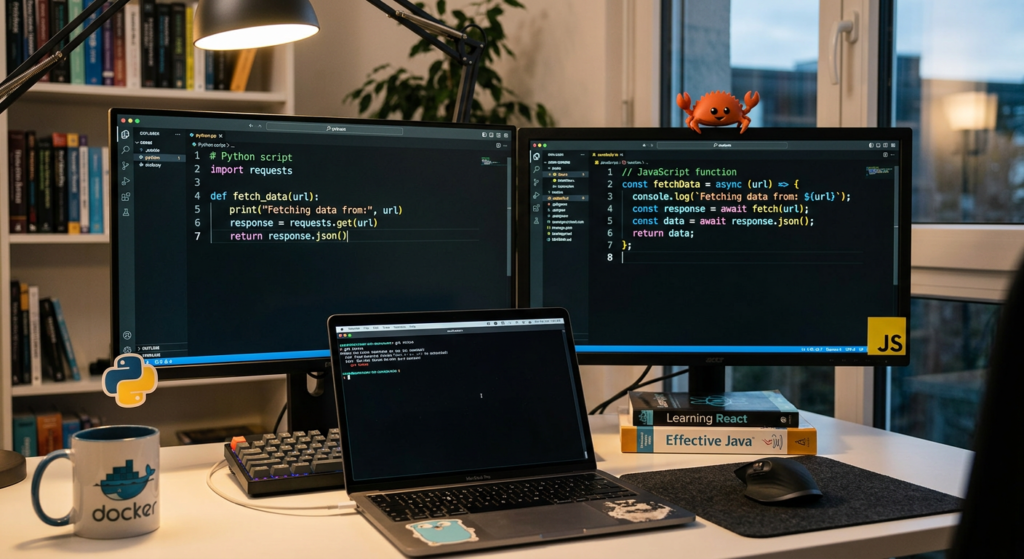
Python is widely considered the easiest programming language for beginners.
Why Python?
- Simple and readable syntax
- Large community and resources
- Used in many fields (AI, data science, automation)
Example:
print("Hello, world!")
Python feels close to natural language, making it ideal for first-time learners.
JavaScript: The Language of the Web
If you are interested in web development, JavaScript is essential.
Why JavaScript?
- Runs in every web browser
- Used for interactive websites
- Works with HTML and CSS
Example:
console.log("Hello, world!");
With JavaScript, you can build websites, games, and even mobile apps.
Which One Should You Choose?
- Choose Python if you want simplicity and flexibility
- Choose JavaScript if you want to build websites
You can always learn the other later. What matters most is getting started.
Step 2: Understand the Basics
Every programming language shares common concepts. Focus on understanding these fundamentals:
Core Concepts:
- Variables (storing data)
- Data types (strings, numbers, lists)
- Conditions (if/else statements)
- Loops (repeating actions)
- Functions (reusable code blocks)
Example in Python:
age = 18

if age >= 18:
    print("You are an adult")
else:
    print("You are a minor")
These basics are the building blocks of all programming. Once you understand them, switching languages becomes much easier.
Step 3: Learn by Doing (Not Just Watching)
One of the most common mistakes is spending too much time watching tutorials without practicing.
Programming is a skill—you learn it by doing.
Effective Learning Strategy:
- Follow a short tutorial
- Practice the concept immediately
- Build small projects
- Make mistakes and fix them
Simple Beginner Projects:
- Calculator
- To-do list
- Number guessing game
- Simple website
Projects help you understand how concepts work together in real situations.
Step 4: Use the Right Tools
You don’t need expensive software to start programming.
Essential Tools:
- Code Editor: Visual Studio Code (free and beginner-friendly)
- Browser: Google Chrome (for JavaScript testing)
- Python Interpreter: To run Python code
These tools are easy to install and widely used by professionals.
Step 5: Practice Consistently
Consistency is more important than intensity.
Instead of studying for 5 hours once a week, aim for:
- 30–60 minutes daily
Why Consistency Matters:
- Builds habit
- Improves memory retention
- Keeps motivation high
Even small daily progress adds up quickly over time.
Step 6: Learn to Debug
Errors are a normal part of programming. In fact, they are one of the best ways to learn.
Common Beginner Mistakes:
- Syntax errors (missing symbols)
- Logic errors (wrong results)
- Typos in variable names
How to Improve Debugging:
- Read error messages carefully
- Search online for solutions
- Break problems into smaller parts
- Test code step by step
Debugging teaches you how to think like a programmer.
Step 7: Build Real Projects
Once you understand the basics, start building real-world projects.
Ideas for Python:
- Password generator
- File organizer
- Simple chatbot
Ideas for JavaScript:
- Interactive website
- Quiz app
- Weather app
Projects help you:
- Apply your knowledge
- Build a portfolio
- Gain confidence
Employers and clients care more about what you can build than what you know in theory.
Step 8: Learn Version Control (Git)
Version control helps you track changes in your code and collaborate with others.
Why Git is Important:
- Saves your progress
- Allows you to experiment safely
- Essential for teamwork
Platforms like GitHub let you:
- Store your projects online
- Share your work
- Contribute to open-source projects
This is a key skill for anyone serious about programming.
Step 9: Join a Community
Learning programming alone can be challenging. Joining a community makes the process easier and more enjoyable.
Benefits of Community:
- Ask questions
- Get feedback
- Stay motivated
- Learn from others
Where to Find Communities:
- Online forums
- Discord groups
- Coding communities
- Social media groups
Surrounding yourself with other learners accelerates your progress.
Step 10: Explore Advanced Topics
Once you are comfortable with the basics, you can explore different paths:
Popular Programming Paths:
- Web Development: HTML, CSS, JavaScript frameworks
- Data Science: Python, data analysis, machine learning
- Mobile Development: Apps for iOS and Android
- Game Development: Unity, Unreal Engine
- Cybersecurity: Ethical hacking and security tools
You don’t need to decide immediately. Explore and find what interests you.
Common Mistakes to Avoid
1. Trying to Learn Everything at Once
Focus on one language and one goal.
2. Skipping the Basics
Strong fundamentals make everything easier later.
3. Fear of Making Mistakes
Errors are part of the learning process.
4. Comparing Yourself to Others
Everyone learns at a different pace.
5. Giving Up Too Early
Programming takes time and patience.
Mindset for Success
Learning programming is not just about code—it’s about mindset.
Key Traits:
- Curiosity
- Patience
- Persistence
- Problem-solving attitude
You will face challenges, but every problem you solve makes you stronger.
A Simple 30-Day Beginner Plan
Week 1:
- Learn basic syntax
- Understand variables and data types
Week 2:
- Practice conditions and loops
- Build small exercises
Week 3:
- Learn functions
- Start a small project
Week 4:
- Complete a project
- Share it online
This plan helps you build momentum and stay focused.
Final Advice
Learning programming is one of the best investments you can make in yourself. It opens doors to opportunities, enhances your thinking, and gives you the power to create.
Key Tips to Remember:
- Start simple
- Practice daily
- Build projects
- Stay consistent
- Keep learning
Final Thought
You don’t need to be a genius to learn programming. You just need to start.
The hardest part is the beginning—but once you take that first step, everything becomes easier. With time, practice, and persistence, you will go from writing your first “Hello, World!” to building real applications.
Your journey starts today. 🚀